Stocks
The Market Is Selling Growth. Quality Stocks Are Quietly Ripping Higher.
As high-beta technology and growth stocks get hit, investors are rediscovering an old-fashioned trade: strong balance sheets, dependable dividends and businesses that don’t need perfect conditions to make money.
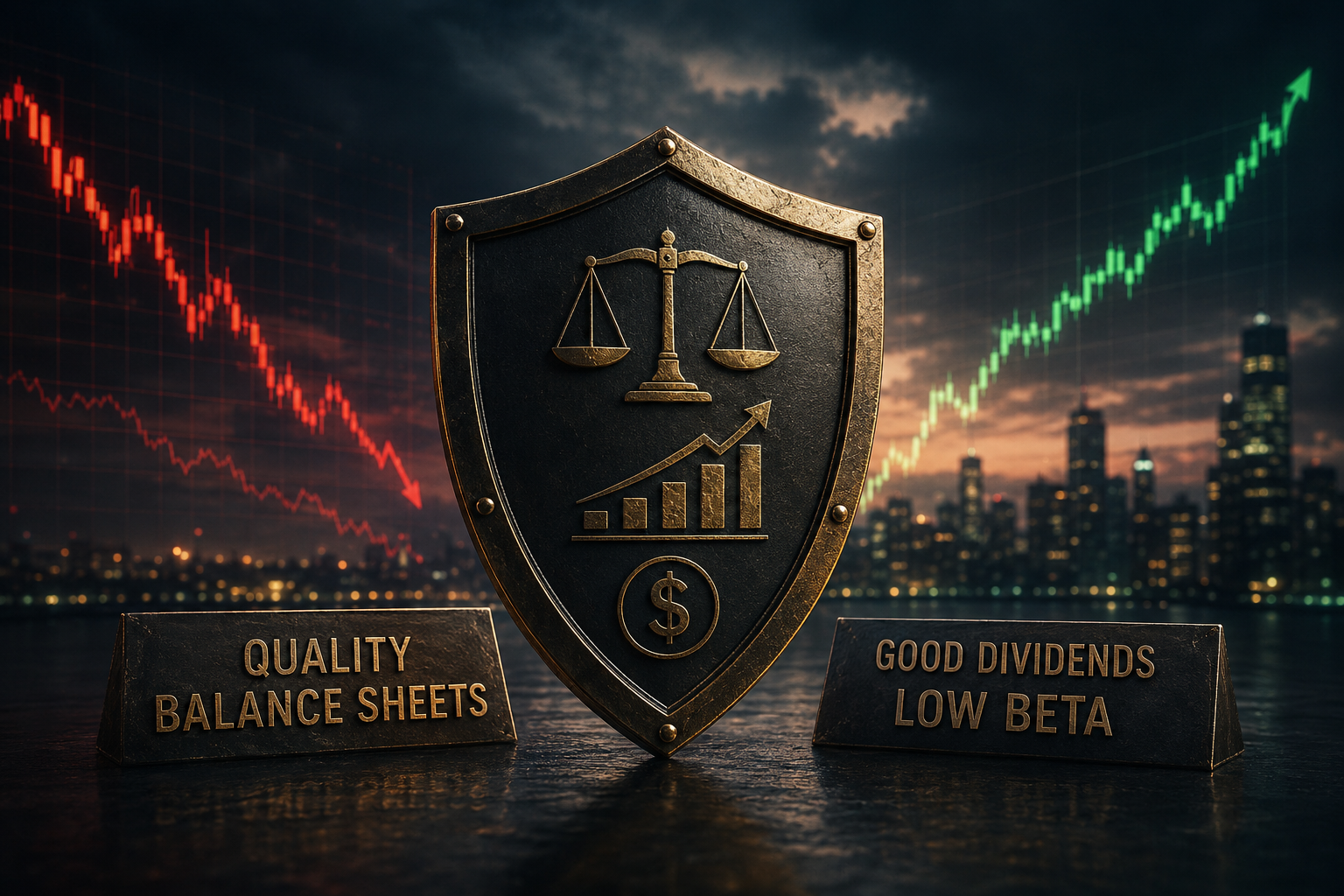
The market selloff is starting to reveal something more interesting than another bad stretch for high-growth stocks.
Money isn’t simply leaving equities.
It is moving.
Across the market, some of the most speculative areas that dominated the earlier stages of the rally are under pressure. AI infrastructure, semiconductors and other high-beta growth trades have been hit particularly hard, with the semiconductor index falling into bear-market territory.
Yet underneath that weakness, a very different group of stocks has been moving higher.
Companies with strong balance sheets, reliable cash flow, reasonable valuations and meaningful dividends are suddenly working again.
And in some cases, they are ripping.
The Rotation Is Becoming Hard to Ignore
For much of the AI-driven bull market, investors were rewarded for taking more risk.
Growth mattered more than current cash flow. Expensive valuations could become even more expensive. Dividend yields looked almost irrelevant when investors could chase substantially larger gains elsewhere.
That dynamic is changing.
Technology has recently been among the weakest areas of the market while capital has rotated toward sectors including healthcare, financials and consumer staples. The broader S&P 500 has remained comparatively resilient even as some of its former high-beta leaders have been punished.
That distinction matters.
This does not look like indiscriminate liquidation. It increasingly looks like investors are becoming more selective about what they are willing to own.
Suddenly, Boring Looks Pretty Good
When volatility increases, investors start asking different questions.
Instead of asking how quickly revenue can grow, they start looking at how much debt sits on the balance sheet.
Instead of paying almost any multiple for future earnings, they begin caring about the earnings being produced today.
Free cash flow matters.
Debt matters.
Valuation matters.
And dividends matter again.
The performance of low-volatility dividend stocks illustrates the shift. The S&P 500 Low Volatility High Dividend Index, which targets some of the S&P 500’s least volatile higher-yielding companies, was up roughly 9.7% year-to-date as of July 20.
Its constituents include companies from consumer staples, healthcare, energy, financials, communications and real estate — almost the opposite of the concentrated high-growth trade investors became accustomed to chasing.
This isn’t necessarily about finding the stock with the largest dividend yield.
It is about finding companies capable of continuing to generate cash and return some of it to shareholders even when economic or market conditions become less friendly.
Low Beta Is Finally Doing Its Job
Beta is easy to ignore during a relentless bull market.
A stock with a beta well above 1 can dramatically outperform when investors are aggressively taking risk. Unfortunately, the same characteristic works in reverse when volatility arrives.
Low-beta stocks generally participate less in those violent swings.
Add a dividend and investors are also being paid while they wait.
Add a strong balance sheet and the company has another important advantage: it doesn’t depend as heavily on favorable capital markets to finance its business.
That combination becomes increasingly attractive when investors begin questioning valuations elsewhere.
The market isn’t suddenly abandoning growth forever. It is simply repricing risk.
The Balance Sheet Is Back
This may ultimately be the most important part of the rotation.
The last several years conditioned investors to focus heavily on income statements — revenue growth, margins and earnings.
In a more difficult market, the balance sheet becomes equally important.
Companies carrying manageable debt, substantial liquidity and consistent free cash flow have options.
They can continue paying dividends.
They can repurchase shares.
They can invest while weaker competitors pull back.
And they don’t have to constantly refinance themselves at whatever interest rate the market happens to offer.
Financial strength effectively becomes its own competitive advantage.
This Doesn’t Mean the AI Trade Is Dead
There is an important distinction between a rotation and the end of a secular investment theme.
The AI buildout remains enormous. Semiconductor demand, data-center construction, networking, memory and power infrastructure are not suddenly disappearing because technology stocks corrected.
But price still matters.
Expectations matter.
And positioning matters.
When investors crowd into the same trades and valuations stretch far enough, even excellent companies can become vulnerable.
The current selloff may actually be healthy if it forces capital to spread across more of the market rather than remaining concentrated in a relatively small collection of momentum stocks.
What I’m Watching
I’m not abandoning growth because defensive stocks are outperforming for a few weeks.
But I am paying considerably more attention to what the market is rewarding.
Right now, the message is pretty clear.
Strong balance sheets. Real earnings. Sustainable dividends. Lower volatility. Reasonable valuations.
For years, those characteristics sounded boring compared with AI, semiconductors and high-growth technology.
During this selloff, boring is starting to look pretty damn good.

Written by
Bryan
Independent technology coverage focused on useful context, real-world experience, and honest recommendations.