Apple
Apple’s MacBook Neo Is Still the Cheapest Way Into a New Mac…But the Value Is Getting Complicated
Apple’s entry-level MacBook now costs more than it did at launch. The hardware remains attractive, but at $699, buyers need to think more carefully about whether the Neo or a discounted MacBook Air might be the smarter purchase.
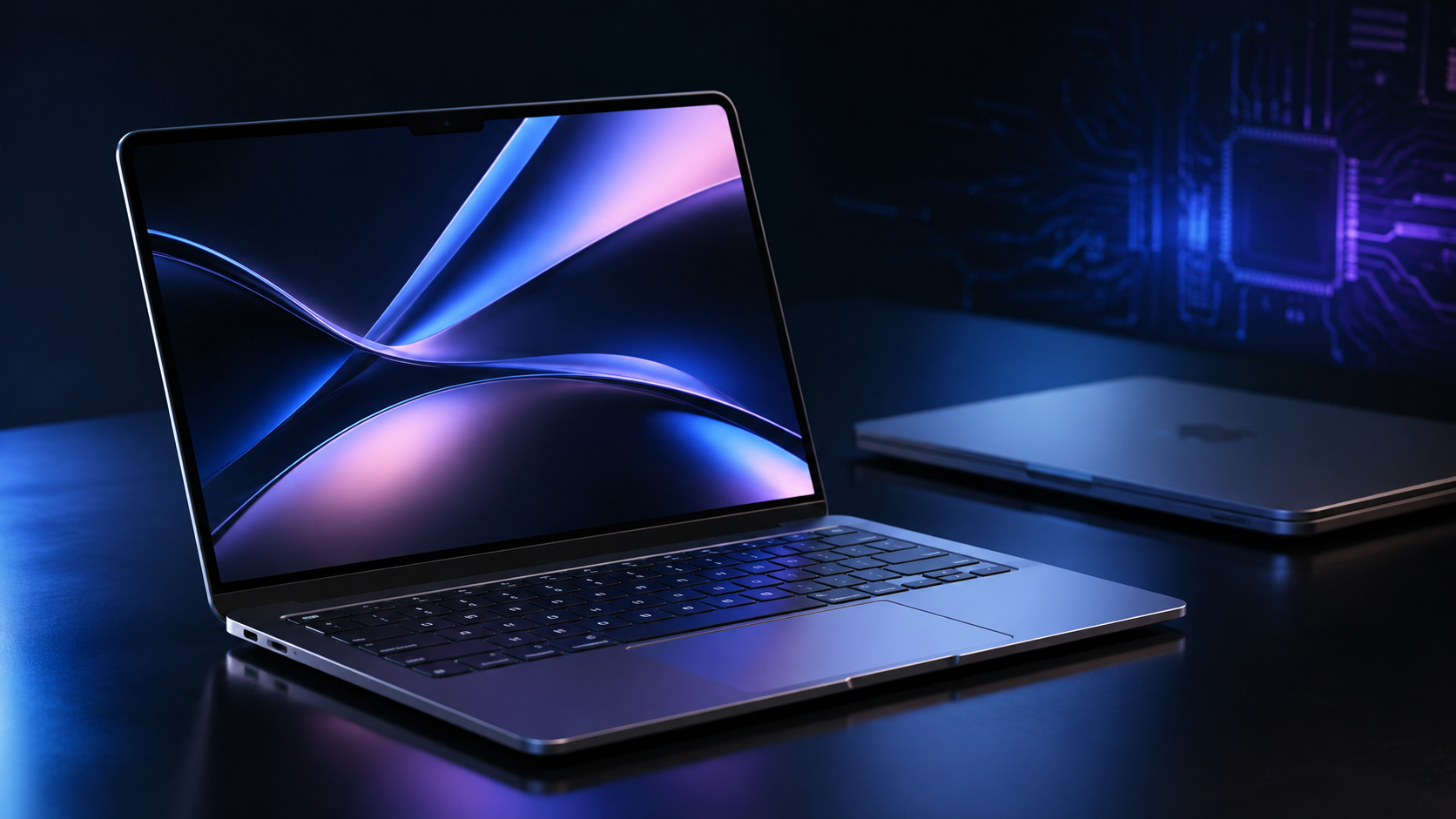
The MacBook Neo was built around one powerful idea
When Apple introduced the MacBook Neo in March 2026, the laptop immediately stood out for one reason: price.
At $599, it was Apple’s most affordable new laptop and a credible alternative to premium Chromebooks and midrange Windows machines. It brought macOS, Apple silicon, a 13-inch Liquid Retina display and Apple’s familiar aluminum construction into a part of the market Apple had largely abandoned.
That original price made the compromises easy to understand. The Neo was not supposed to replace a MacBook Air or MacBook Pro. It was designed for students, families, casual users and anyone who wanted a straightforward Mac without paying four figures.
The problem is that Apple now lists the MacBook Neo from $699, while qualified education buyers can still purchase it from $599. That $100 increase changes the value calculation more than it may appear.
At $599, the Neo felt disruptive.
At $699, it has to defend itself.
Buy the MacBook Neo
Amazon affiliate link:
Apple 2026 MacBook Neo with A18 Pro, 8GB memory and 256GB SSD
Compare additional colors and configurations:
Shop MacBook models on Amazon
Prices and availability can change. Confirm the final configuration and price at the retailer before purchasing.
What you get for $699
The standard MacBook Neo combines an A18 Pro chip, 8GB of unified memory, 256GB of SSD storage and a 13-inch Liquid Retina display. Apple’s technical documentation identifies a six-core CPU and five-core GPU, while the display supports one billion colors and reaches 500 nits of brightness.
Apple also advertises up to 16 hours of battery life, a 1080p FaceTime HD camera and support for Apple Intelligence.
For ordinary work, that is a useful package.
The Neo should be well suited to:
- Web browsing and email
- Writing and schoolwork
- Streaming and video calls
- Basic photo editing
- Cloud-based productivity
- Light Apple Intelligence features
- General household use
The A18 Pro is not an M-series Mac processor, but it gives Apple a way to deliver excellent efficiency and responsive everyday performance without turning the Neo into a cheaper MacBook Air.
That distinction matters. The Neo is an entry-level Mac by design, not a secretly discounted professional computer.
The compromises are more noticeable at the new price
The MacBook Neo’s limitations were easier to accept at $599.
It has only 8GB of unified memory in its base configuration. That should remain adequate for lighter use, but it leaves less room for demanding multitasking, larger creative applications, local AI models and long-term software growth.
The 256GB SSD can also fill quickly once photos, videos, applications and offline files begin accumulating.
The Neo additionally lacks several features buyers may expect from a $699 laptop. Competitors at similar prices can offer touchscreens, backlit keyboards, larger storage configurations or more flexible port selections. Recent comparisons have highlighted the Dell XPS 13 as one particularly aggressive alternative in this range.
None of those weaknesses automatically makes the Neo a bad purchase.
They simply mean the buyer needs to be a good match for the machine.
The MacBook Air is the real threat to the Neo
The strongest alternative may not be a Windows laptop. It may be Apple’s own MacBook Air.
The current MacBook Air uses the more powerful M5 chip, offers up to 18 hours of battery life and is designed for more demanding AI, productivity and creative workflows.
The Air is the better long-term computer for buyers who expect to keep their laptop for several years, regularly use heavier applications or want more performance headroom.
That does not mean everyone should spend more. A buyer who mainly uses Safari, Mail, Messages, streaming services and basic productivity tools may notice little practical difference during normal daily use.
The decision becomes more difficult when retailers discount the MacBook Air. A sale can narrow the gap enough that paying more for the M-series processor, longer useful life and stronger overall platform becomes the better value.
Amazon affiliate link:
Check current MacBook Air prices on Amazon
The AI memory problem is moving downstream
The Neo’s price increase also reflects a larger shift across the technology industry.
AI infrastructure requires enormous quantities of high-bandwidth memory, server DRAM, storage and advanced manufacturing capacity. Suppliers can earn more by prioritizing components for AI accelerators and data centers than by dedicating the same resources to lower-margin consumer electronics.
That pressure does not remain confined to Nvidia GPUs or hyperscale data centers. It moves through the supply chain and eventually affects laptops, tablets, phones and other devices.
Apple is particularly exposed because its products increasingly depend on unified memory for the CPU, GPU, Neural Engine and on-device AI workloads. Memory is not a minor component that can be upgraded later. It is central to the architecture and fixed at the time of purchase.
The contradiction is becoming difficult to avoid: AI is increasing the cost of memory at the same time that AI software requires devices to include more memory.
Apple’s recent Mac sales have remained strong despite the shortage, but the company has warned that memory constraints and costs are becoming more significant.
Who should buy the MacBook Neo?
The Neo still makes sense for buyers who want a new, compact Mac for basic work and strongly prefer macOS.
It is especially compelling at the $599 education price. At that level, the machine recovers much of the value proposition that made its launch so interesting.
The $699 retail model is best for someone who:
- Wants the least expensive new Mac
- Values battery life and portability
- Primarily performs lighter tasks
- Does not need a touchscreen
- Can manage with 256GB of storage
- Does not expect demanding local AI or creative workloads
Buyers who anticipate heavier multitasking, video editing, software development or several years of increasingly demanding AI features should look toward the MacBook Air.
The bottom line
The MacBook Neo remains an appealing entry point into Apple’s ecosystem, but it is no longer an automatic recommendation.
At $599, its compromises feel purposeful.
At $699, they feel more expensive.
The design, display, battery life and simplicity remain strong, and the Neo is still likely to be enough computer for a large number of people. But buyers should compare its live price against MacBook Air discounts before checking out.
The Neo is still Apple’s cheapest new MacBook.
It is simply no longer the obvious bargain it was at launch.
Continue reading

Written by
Bryan
Independent technology coverage focused on useful context, real-world experience, and honest recommendations.