Apple
Apple Has an iPhone Duo Problem That Demand Cannot Fix
The iPhone Duo is desirable, but demand does not answer questions about cracked displays, unfinished apps, expensive repairs, and the compromises behind its $1,999 price.
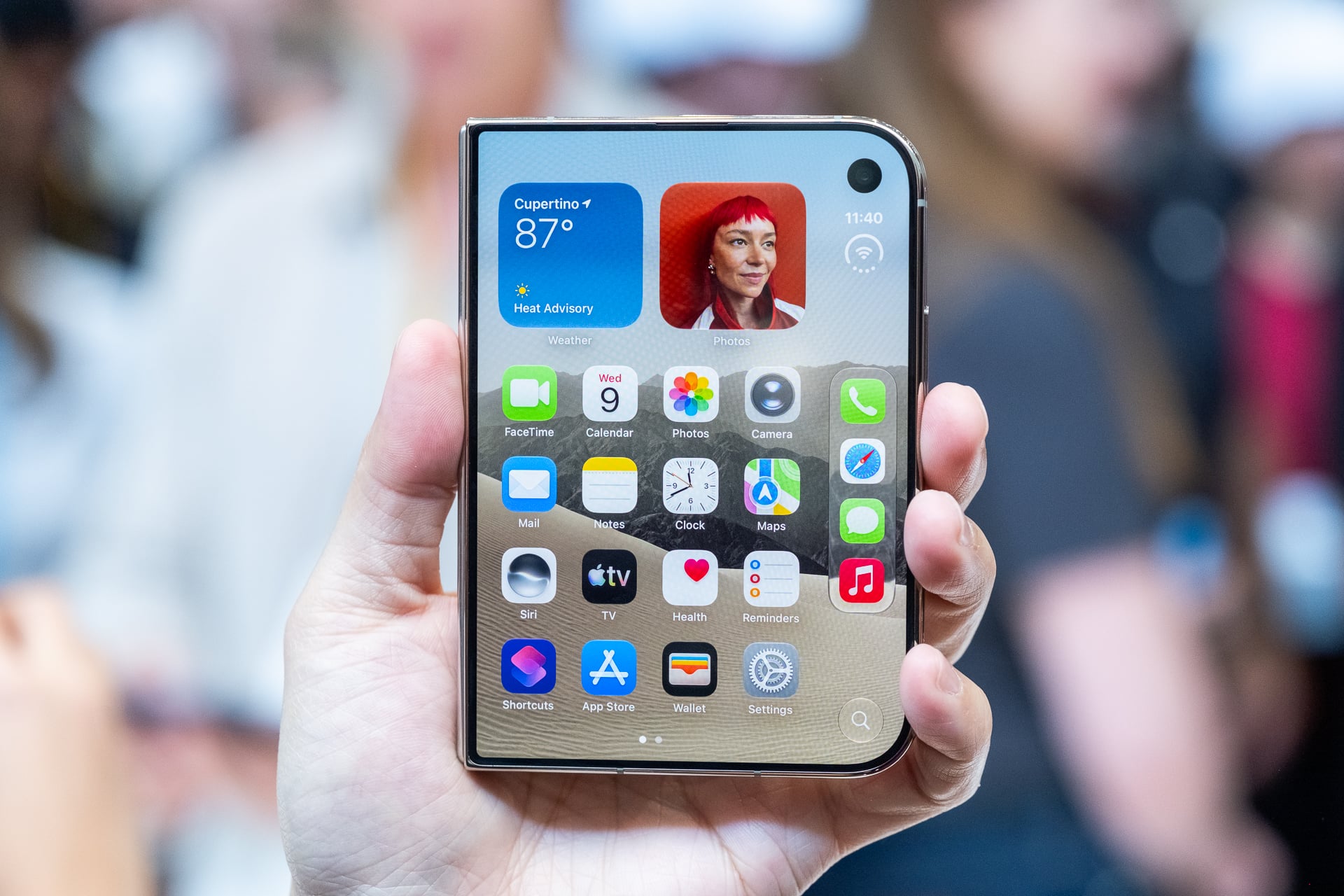
Cracked displays, unfinished app support, expensive repairs, and familiar compromises make Apple’s first foldable a harder recommendation than its sales suggest.
I think Apple has some real problems with the iPhone Duo.
The phone is desirable. The concept is compelling. Neither of those things answers the questions surrounding it.
Apple’s first foldable starts at $1,999. For that money, buyers deserve confidence in the screen, software that makes good use of the extra space, and a clear understanding of the compromises involved. Apple’s launch announcement sets out the price and the promise.
Right now, that confidence is harder to justify than the excitement.
Apple has acknowledged an inner display issue. Some major apps still do not properly use the larger screen. Repair costs are substantial. And the most expensive iPhone format brings tradeoffs that buyers need to understand before ordering.
None of that proves the Duo is a failure.
It does mean that being difficult to buy should not be confused with being easy to recommend.
The Display Problem Is Real. Its Scale Is Still Unclear.
On October 26, Apple acknowledged an issue affecting the inner display on a small number of iPhone Duo units and directed affected owners to AppleCare for a replacement.
9to5Mac received Apple’s statement directly. Its reporting also says AppleCare+ is not required for replacement under this acknowledged issue.
That distinction matters. Owners should not assume they need an insurance subscription to resolve a fault Apple has recognized.
The scale of the problem is a separate question.
Apple describes the affected population as small. Public complaints do not establish a reliable failure rate, and a feed full of broken screens cannot tell us how many working phones are out there.
But uncertainty cuts both ways.
We cannot responsibly call every Duo defective. We also cannot dismiss a confirmed display issue because most owners have not experienced it.
A folding screen is central to the reason this phone exists. Problems there deserve more scrutiny than an inconvenient setting or an occasional animation glitch.
The Teardown Raises Questions Without Proving the Cause
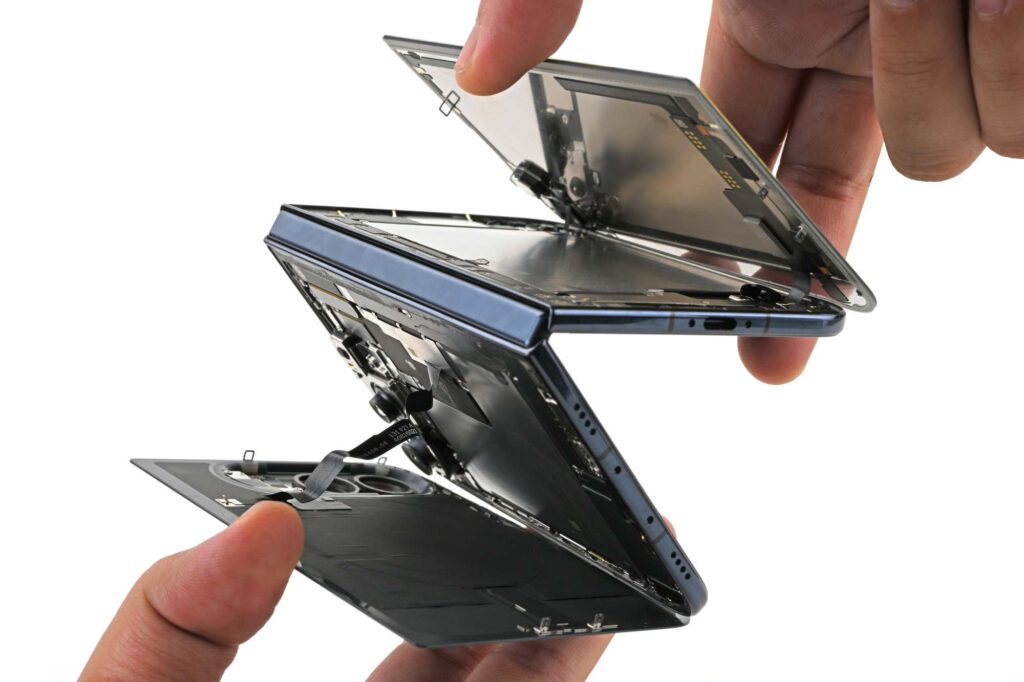
iFixit’s teardown examined the hinge and display support structure using disassembly, CT scans, and modeling.
Its analysis identified a possible stress point near a transition in the screen’s support. One simulation showed how a support bar failing to move far enough could concentrate pressure near reported damage locations.
That is a hypothesis, not a confirmed explanation for every failed screen.
The teardown also found things Apple deserves credit for. Battery removal was unusually good for a foldable, several components were accessible, and the phone earned a provisional repairability score of 5 out of 10, the highest iFixit had awarded a folding smartphone.
Its powder test still found particles reaching moving hinge parts, although less visible powder accumulated than in its previous competing foldable tests. iFixit explicitly distinguished that experiment from a formal ingress protection test.
The engineering picture is mixed.
There are thoughtful improvements here. There are also unresolved questions around the most important moving assembly in the phone.
The Repair Bill Changes the Ownership Equation
The purchase price is only the beginning of the calculation.
iFixit’s review of Apple’s published service prices lists inner display damage at $999 without coverage, compared with a $99 service fee with AppleCare.
Those figures describe damage service pricing. They should not be confused with the replacement response for Apple’s acknowledged display issue.
Still, an uncovered repair approaching half the phone’s starting price deserves attention.
People drop phones. Devices leave warranty coverage. Ownership continues long after the launch excitement disappears.
Repairability helps when parts can be replaced. Affordability determines whether replacing them makes sense.
The Duo needs to succeed at both.
The App Problem Undercuts the Point of the Bigger Screen
The hardware concern is serious. The software concern may be encountered more often.
In testing published by Tom’s Guide, Mark Spoonauer documented major apps that still used the inner display poorly.
Google Drive and Google Sheets appeared with large black bars. Uber, LinkedIn, DoorDash, Google Calendar, and Wells Fargo were also among the examples criticized.
These are observations from that testing, and app updates can change the situation. They are not a permanent verdict on each developer.
But the underlying problem is straightforward.
A spreadsheet is exactly the kind of task that should benefit from more space. If the application fails to use it properly, the buyer carries the extra hardware without receiving the full benefit.
There are positive examples too. Spoonauer highlighted optimized experiences including YouTube TV and AirMail.
That makes the inconsistency more frustrating.
Apple does not write every app. Developers are responsible for their own updates. But Apple sells the device and the experience surrounding it.
Buyers should check the apps they use every day before assuming a larger display will make those apps better.
You Are Paying for the Fold, With Other Compromises Attached
The Duo’s specifications make the tradeoffs clear.
According to Apple’s technical specifications, it weighs 254 grams and measures 11.3 millimeters thick when folded. Its outer display measures 5.4 inches, while the inner display measures 7.6 inches.
It uses Touch ID in the side button.
The rear camera system includes a main camera and an ultrawide camera. Apple advertises a 2x option derived from the main camera, but there is no separate dedicated telephoto camera.
None of those decisions automatically makes it a bad phone.
Some people prefer Touch ID. Others will happily accept extra weight for a larger screen. Plenty of buyers rarely use a long zoom lens.
The issue is the expectation attached to the price.
Spending more does not mean receiving every premium feature. Here, much of the extra money buys the folding format.
That format needs to improve your actual day enough to justify what comes with it.
Supply Shortages Are a Different Problem
Apple also has a supply problem.
On November 2, CEO John Ternus told Reuters that the Duo remained constrained and that Apple could not predict when supply and demand would balance, according to MacRumors’ account of the interview.
That establishes an availability problem. It does not establish a quality verdict.
A product can attract strong interest and still need important fixes. Buyers can love the concept while reasonably expecting better execution.
We also should not assume that limited retail stock means replacement devices are unavailable. Those are different inventories, and one does not prove the other.
What Apple needs is a purchase and service experience that gives customers clear answers.
Scarcity creates urgency. It should not replace judgment.
Apple Has Built Something Worth Wanting
There is a reason the Duo attracts attention.
Apple’s launch materials describe two apps running side by side, saved app pairs, and optimized experiences from developers including Netflix, Zoom, and Slack. Apple’s software overview makes the appeal clear.
A phone that opens into a more useful workspace is an attractive idea.
The problem is consistency. That benefit needs to survive the move from selected demonstrations to the apps, habits, and environments of ordinary ownership.
A customer should be thinking about what to do with the larger screen.
They should not have to wonder whether an essential app will waste it or whether opening the device will become a service appointment.
My Advice Is to Let the Evidence Catch Up
I would be cautious about buying the iPhone Duo right now.
The display issue is acknowledged, but its public scope remains unclear. Important apps still need attention. Repair costs raise the stakes of ownership, and the hardware compromises will matter differently to different buyers.
If you are considering one, try your essential apps on the inner display. Hold it folded. Compare the camera options with what you already use. Understand the service costs before deciding whether the format earns its premium.
For existing owners experiencing the acknowledged display problem, Apple’s guidance is to contact AppleCare.
I am not writing off the Duo. There is enough ambition here to make it interesting, and enough thoughtful engineering to avoid reducing it to a collection of complaints.
But I think Apple has more work to do before this becomes an easy recommendation.
The iPhone Duo has proved that people want a folding iPhone. Apple still needs to earn their confidence in owning one.

Written by
Bryan
Independent technology coverage focused on useful context, real-world experience, and honest recommendations.