Apple
iPhone Duo Durability Is About More Than a Fold Count
A strong fold test gives the iPhone Duo encouraging durability evidence. Screen complaints, replacement experiences, and expensive repairs still raise questions about everyday ownership and whether buyers should wait.
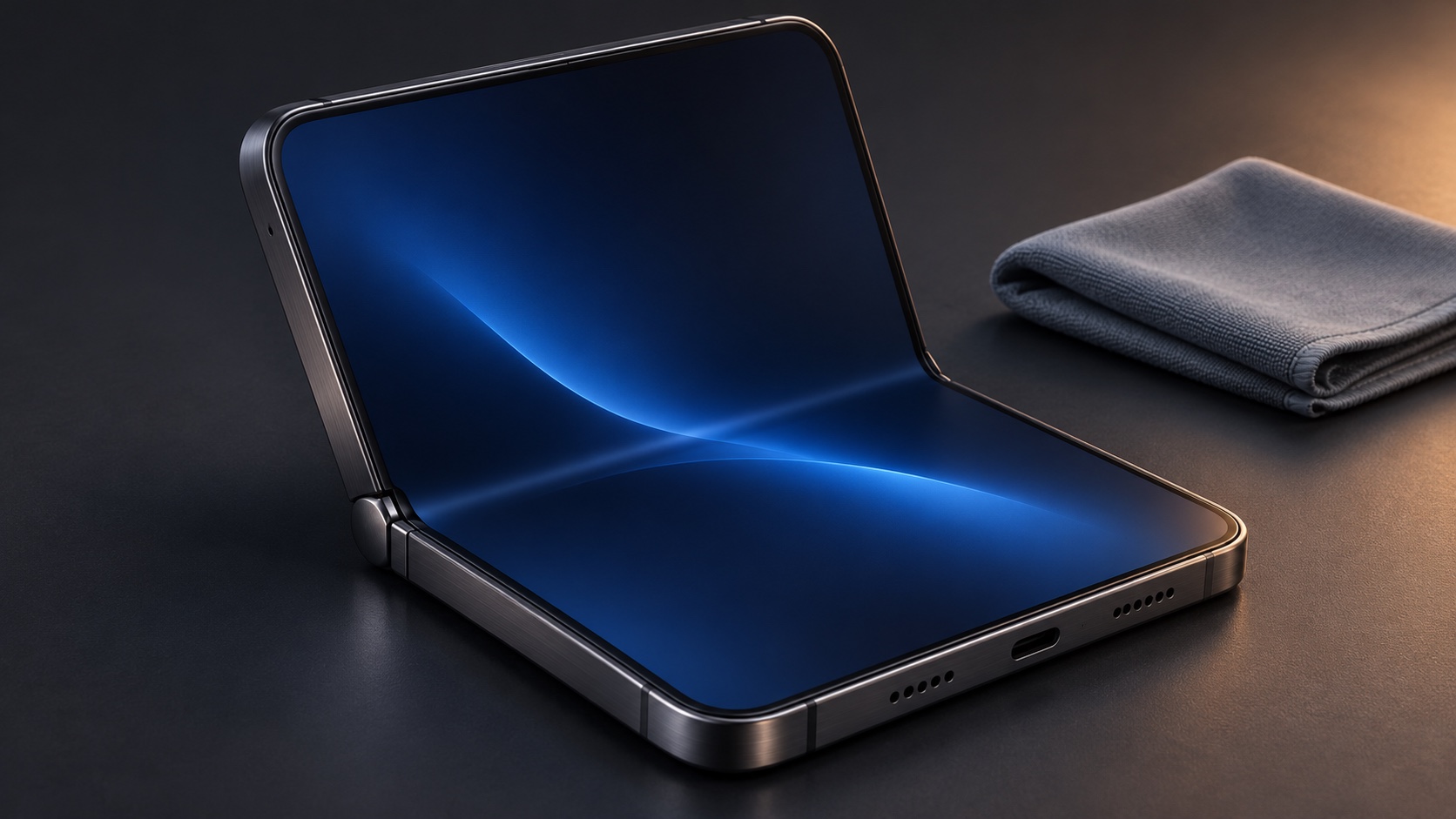
Apple’s first foldable needs to earn confidence through ordinary ownership. More accessories and a replacement promise can only do so much.
By Bryan | November 16, 2026
Disclosure: As an Amazon Associate I earn from qualifying purchases. Amazon shopping links below are paid links. Read the affiliate disclosure.
AI generated editorial illustration of a conceptual foldable device, not an official Apple product image.
The most important iPhone Duo durability test happens when someone opens the phone to answer a message, check a document, or show a photograph.
That is the standard I keep coming back to. A folding iPhone has to make those ordinary moments feel dependable before its larger display can become an advantage worth paying for.
In my earlier article about Apple’s iPhone Duo problem, I covered the cracked displays, unfinished apps, repair costs, and compromises behind the phone’s appeal. This follow up narrows the question to ownership: how much confidence should you have in the screen, what happens if it fails, and which precautions are actually useful?
My advice remains to wait if your current phone works well. Recent machine testing offers encouraging evidence, but buying a Duo still requires more tolerance for uncertainty than I would want from my everyday phone.
A strong fold test is encouraging
The positive evidence deserves space in this discussion. In its November 13 durability update, CNET reported more than 451,000 folds on its test device. The phone still worked, with no cracking or more visible crease reported.
The hinge had begun loosening, and the machine no longer opened it completely flat during each cycle. CNET said it could still be opened fully by hand and had not met the test’s established failure conditions.
That is a substantial result. It pushes back against the idea that a folding iPhone must quickly wear out simply from being opened and closed.
It also answers a different question from the early failure reports. Repeated folding of one device cannot establish the frequency of faults across production units or reproduce every combination of grit, pressure, and handling encountered over years of ownership. I would take this as a reason for optimism about repeated folding, while still wanting clearer answers for affected customers.
Replacement reports keep the durability question open
The concern has continued beyond the first wave of launch complaints. In a recent owner post on Reddit, a buyer says a replacement Duo developed another inner display problem within a day of setup. The owner reports careful handling and no drops.
That is an account from one owner, without an independent diagnosis. It cannot tell us how often this happens, whether both failures had the same cause, or whether replacement devices are generally less dependable.
It does raise a practical question for anyone already dealing with a broken screen: what reassurance comes with the replacement?
Apple’s October 26 statement to 9to5Mac acknowledged an inner display issue affecting a small number of units and directed affected owners to AppleCare for a replacement. That reporting also says AppleCare+ is not required for replacement for this problem.
There is still no reliable failure percentage in those accounts. A collection of complaints is a reason to investigate, not a way to calculate the odds that your phone will break.
For a buyer, though, uncertainty has a cost. You have to decide whether the extra screen is valuable enough to accept the possibility of an interrupted setup, a service appointment, or another period without your main phone.
The hinge findings deserve attention without guesswork
iFixit’s teardown identified a possible stress point where the screen’s support changes near the hinge. Its modeling showed how a support bar failing to move far enough could concentrate pressure near reported damage locations. That remains a hypothesis, rather than a confirmed explanation for every failure.
The same teardown awarded a provisional repairability score of 5 out of 10, its highest for a foldable at the time. Easier battery removal and access to some components earned credit, while the inner screen and hinge remained difficult repairs.
Its fluorescent powder experiment also found particles reaching moving hinge parts and producing a crunching sound. iFixit explicitly says this was not a formal IP certification test.
Those findings leave me cautious about treating the Duo like a conventional iPhone. Apple lists IP68 resistance in its specifications, but that rating should not become permission to ignore grit around a moving hinge.
For owners, the sensible response is careful handling. If the hinge suddenly feels different or the display develops a line, I would stop repeatedly opening and closing it to investigate and arrange an inspection.
A display defect and accidental damage are different service cases
This is the distinction owners need to understand before looking at repair prices.
Apple’s response to its acknowledged display issue directs affected customers toward replacement. Accidental damage is a separate category, with its own coverage and fees. A cracked display needs assessment to establish which situation applies.
iFixit’s comparison of Apple’s published U.S. repair prices lists inner display damage at $999 without coverage, compared with a $99 service fee with applicable AppleCare coverage. It also lists a much cheaper cover layer service, which is a different repair from replacing the inner OLED display.
Those figures make the ownership decision more serious. They do not mean every owner reporting the acknowledged issue owes $999, or that buying AppleCare+ is a condition of getting that issue addressed.
Apple says it inspects devices to determine the final service fee. Location, coverage, taxes, and the provider can affect the estimate. Ask how the problem has been classified and request the explanation before agreeing to paid work.
I would consider accidental damage coverage carefully if buying a Duo. I would also include the plan cost and applicable service fees in the price of ownership, rather than treating them as an afterthought.
What a case and cleaning cloth can realistically do
A case can be a sensible precaution against everyday knocks. It cannot establish that an internal screen or hinge fault has been solved.
If you already own the phone, compare cases designed specifically for the iPhone Duo. Pay attention to how they fit, whether the hinge moves freely, and whether the design makes trapped debris easy to notice. A claim of hinge protection is something to evaluate, not a guarantee of display reliability.
Compare iPhone Duo cases with hinge protection on Amazon (paid link)
For cleaning, Apple’s current nano texture display guidance allows a clean Apple Polishing Cloth or another microfiber cloth made for electronic displays. You do not need to buy a new cloth if you already have a suitable clean one.
Browse microfiber cloths for electronic displays on Amazon (paid link)
These are shopping searches, not products I have personally durability tested. Check the exact model, seller, fit, and return terms before ordering.
I would also follow Apple’s handling instructions: keep objects off the inner display before closing the phone, leave the integrated cover layer in place, and avoid adding an external inner screen protector that could compromise display performance.
If your Duo develops a problem
If a line appears, the display cracks, or the hinge develops unusual resistance, document the symptoms before trying to reproduce them.
- Photograph the screen and the outside of the device. Note when the problem appeared and what happened immediately beforehand.
- Back up the phone if it remains usable. Avoid further folding if movement appears to worsen the problem.
- Contact Apple Support and ask whether the symptoms fall under the acknowledged inner display issue.
- Get a case number, the proposed remedy, any charge, and the expected timing. If a charge is proposed, ask why the problem is being classified as accidental damage.
This gives the service team useful information and gives you a record of the conversation. It does not guarantee a particular diagnosis or replacement timeline.
Waiting is still a reasonable buying decision
The larger screen needs to improve something you actually do. Reading, documents, and two apps side by side can make a foldable appealing. The benefit becomes less convincing if ownership means constantly worrying about the next opening.
There is a related lesson in my Galaxy Z Fold 8 article: the shape of the hardware is only part of the experience. The apps, reliability, and service response all have to support the reason you bought it.
If you are choosing a new phone now, compare the Duo with a conventional model and ask what the fold adds to your day. My Pixel 11 buying guide takes a similar approach to deciding whether a more expensive format earns its premium.
Compare conventional iPhone options on Amazon (paid link)
For existing Duo owners, useful protection and prompt support are sensible steps. CNET’s result is encouraging evidence for repeated folding. For everyone still considering one, I would give the phone more time to establish a record through ordinary use.
Apple has made the folding iPhone desirable. Dependability is what will make it easier to recommend.

Written by
Bryan
Independent technology coverage focused on useful context, real-world experience, and honest recommendations.